Address
Flat No. I-3, Rupchandr Complex, B-Wing,
3rd Floor, Next To Surana Complex, Aurangpura

Flat No. I-3, Rupchandr Complex, B-Wing,
3rd Floor, Next To Surana Complex, Aurangpura

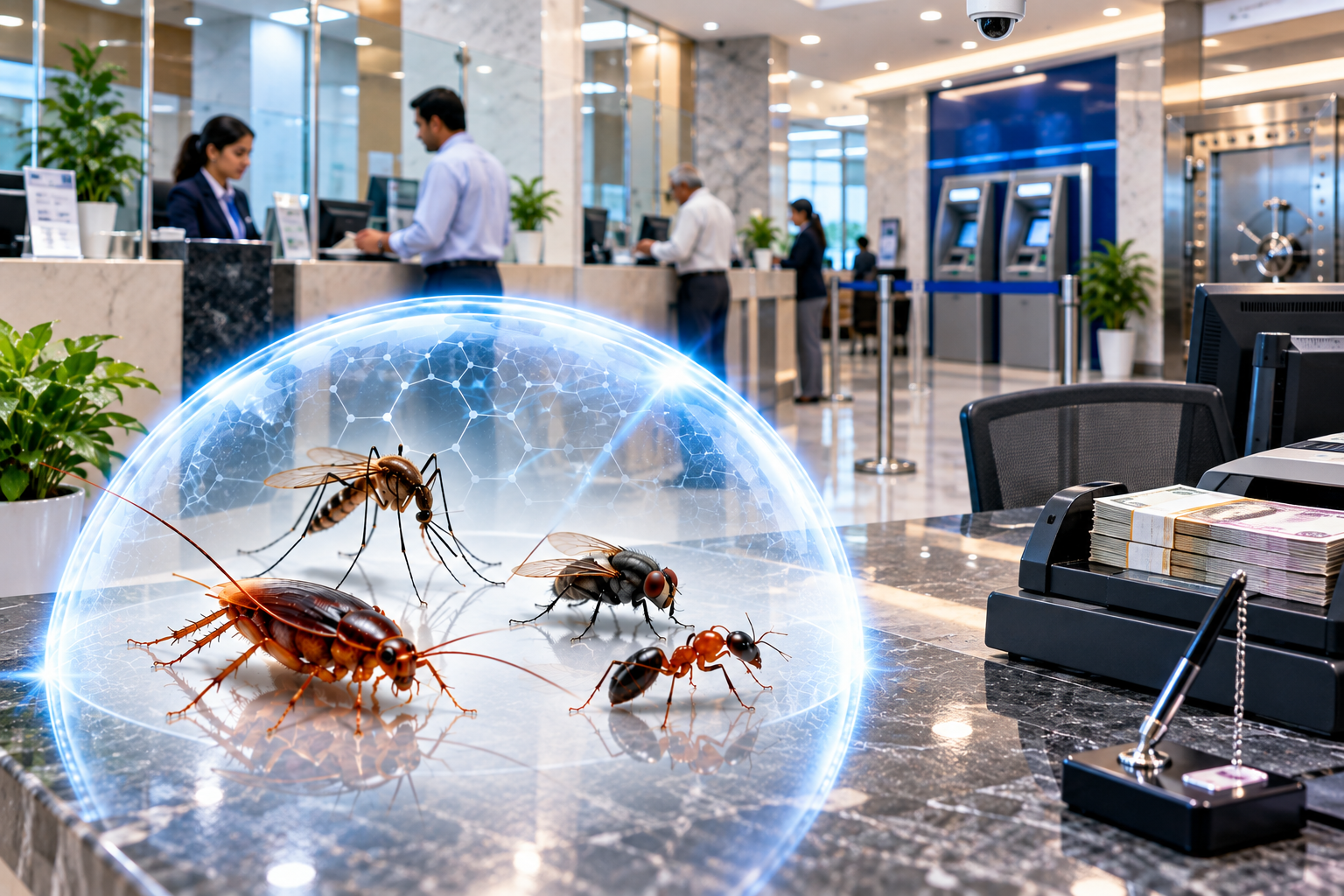
Banks and financial institutions operate in environments where customer experience, workplace standards, security, technology, records, and uninterrupted operations all matter.
Branches, offices, ATM areas, document-storage rooms, staff facilities, server rooms, electrical spaces, pantry areas, and external premises can each present different pest-management challenges.
24×7 Pest Management Services provides customized pest-management programs for banks, financial institutions, corporate offices, and related facilities, focusing on prevention, discreet service, monitoring, targeted control, and long-term risk management.
Financial facilities combine public-facing spaces with highly controlled operational and support areas. Pest management therefore needs to consider the entire property.
Bank Branches
Corporate Banking Offices
Financial Institution Offices
NBFC Offices
Insurance Offices
Investment & Financial Services Offices
Cooperative Banks
Credit & Lending Offices
ATM & Self-Service Facilities
Record & Document Storage Areas
Administrative & Back-Office Facilities
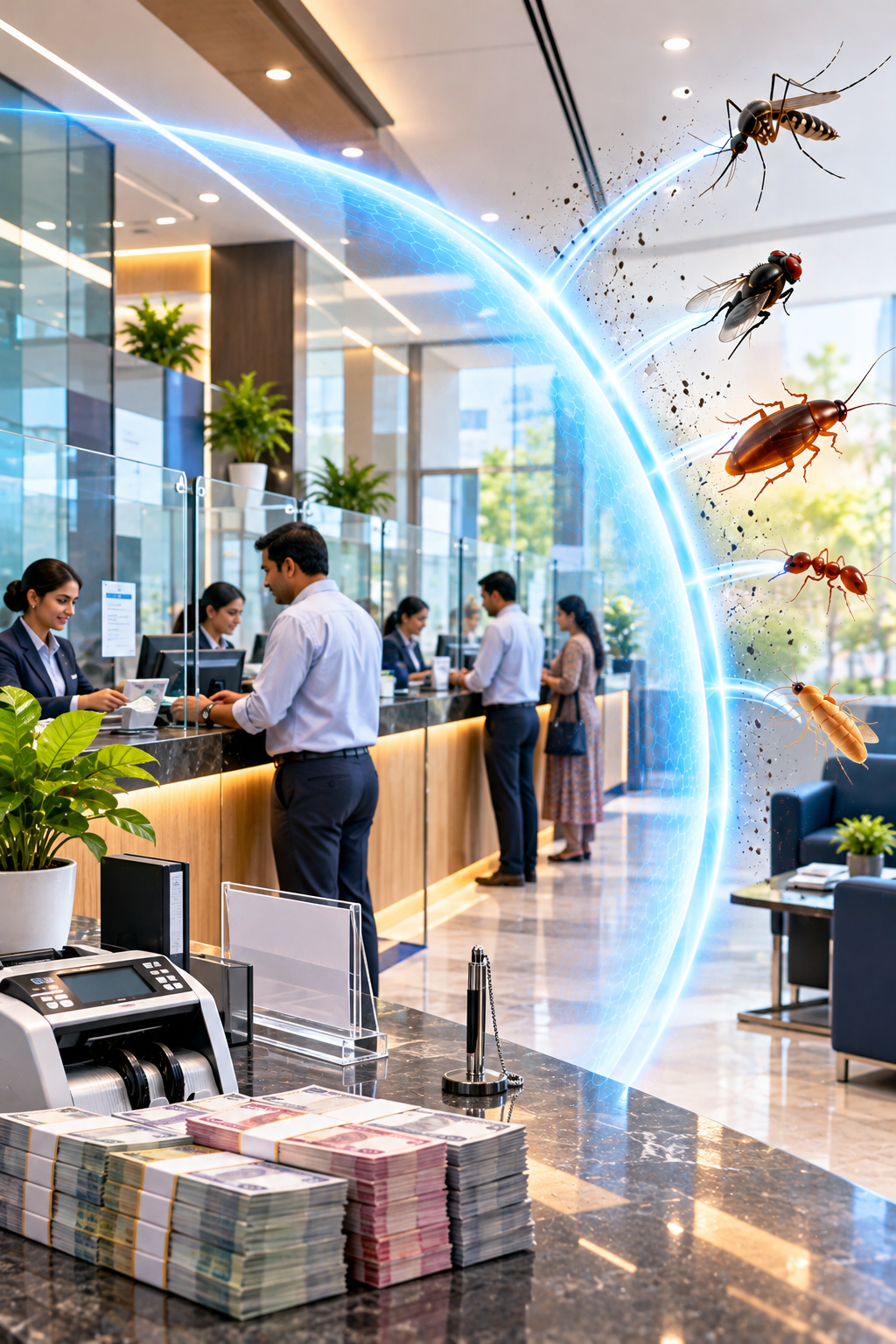


Continuous movement through entrances, banking halls, waiting areas, and self-service zones can create opportunities for pest entry.
Employee pantries, refreshment areas, food storage, waste, and drainage can contribute to insect and rodent activity.
Documents, cartons, archives, storage rooms, and rarely accessed areas may require appropriate inspection and monitoring.
Cable routes, server rooms, electrical panels, equipment spaces, and service openings can provide potential access or harbourage.
Doors, windows, ventilation openings, service penetrations, and structural gaps may provide routes for pest entry.
Leaks, damp areas, plumbing locations, drains, and standing water can contribute to certain pest activity.
Waste accumulation, food residues, storage practices, and housekeeping conditions can influence pest pressure.
Vegetation, drainage, waste areas, neighbouring properties, and building perimeters may influence pest activity inside the premises.
Inspect customer areas, workspaces, storage, technology rooms, utilities, pantry areas, and external premises.
Locate pest activity, potential entry points, harbourage conditions, moisture sources, and other contributing factors.
Determine which areas require attention based on pest activity, facility sensitivity, customer exposure, and operational requirements.
Recommend practical measures related to housekeeping, waste, storage, exclusion, drainage, and building conditions.
Use suitable inspection and monitoring practices to identify activity and changing risk conditions.
Apply targeted pest-management measures where required according to the pest, location, and facility conditions.
Programs are developed around branches, offices, customer areas, technology spaces, storage, and supporting facilities.
Where practical, service activities can be scheduled to minimize unnecessary disruption to customers, employees, and daily business operations.
Server rooms, electrical areas, cable routes, and equipment spaces can be considered during site assessment.
We focus on identifying conditions that may contribute to recurring pest activity and provide practical recommendations where appropriate.
Inspection observations, pest activity, treatment information, recommendations, and follow-up requirements can be documented as part of the agreed service program.
AMC programs can provide scheduled inspections, monitoring, preventive measures, targeted control, follow-up, and periodic program review.
Call Now
Mail Id
Visit office