Address
Flat No. I-3, Rupchandr Complex, B-Wing,
3rd Floor, Next To Surana Complex, Aurangpura

Flat No. I-3, Rupchandr Complex, B-Wing,
3rd Floor, Next To Surana Complex, Aurangpura

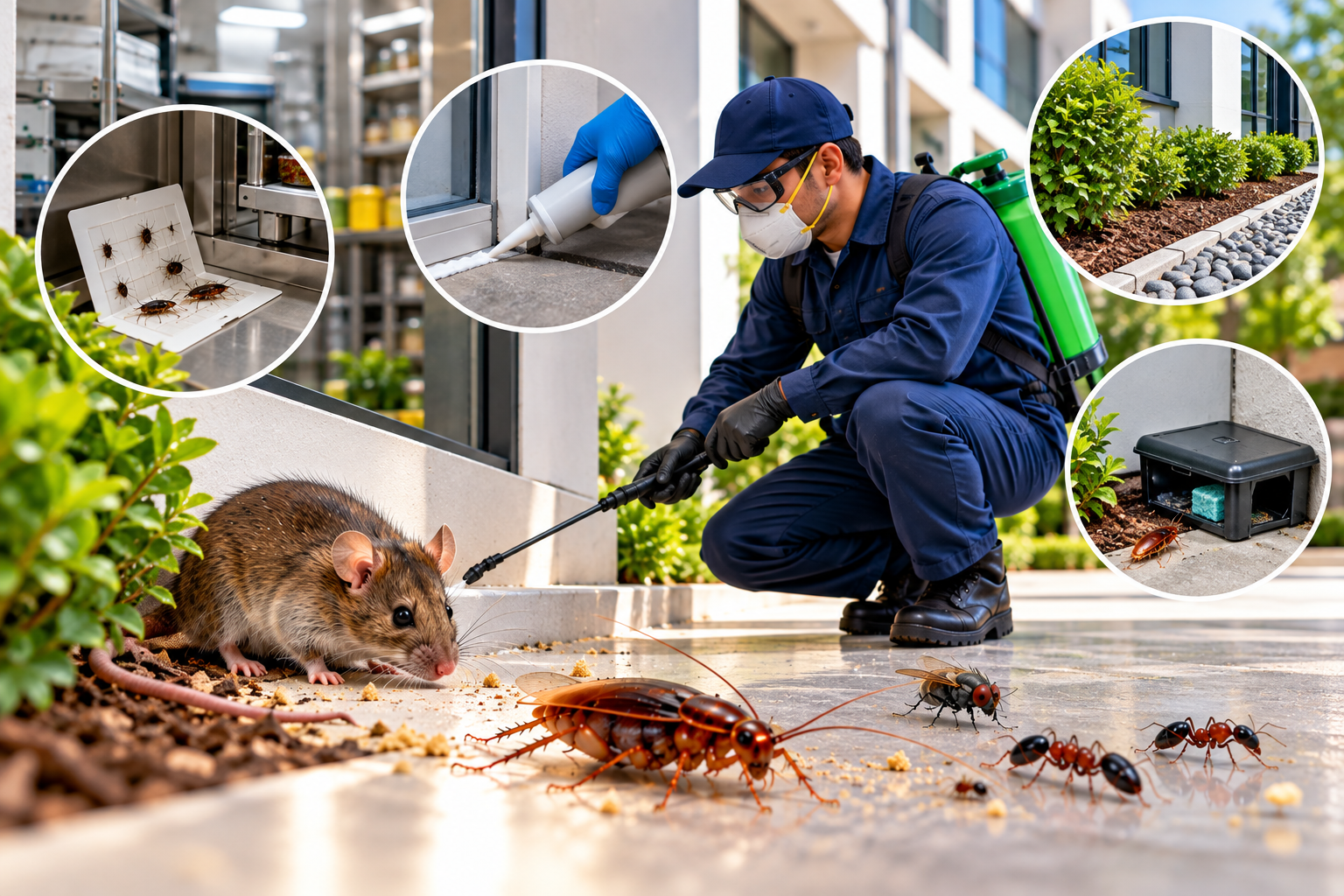
Effective pest management requires more than treating visible pest activity. It involves understanding why pests are present, identifying the conditions that support them, selecting appropriate control methods, and reviewing results over time.
At 24×7 Pest Management Services, our Integrated Pest Management (IPM) approach brings these activities together within a coordinated plan tailored to the facility, its operating requirements, and the pest-related risks identified during assessment.
By combining preventive practices, monitoring, environmental management, and targeted treatments where necessary, IPM supports informed decisions and helps reduce reliance on routine, treatment-only responses.
Understand the nature of the pest issue, assess affected areas, and identify conditions that may be contributing to the problem.
Address relevant housekeeping, waste handling, moisture, storage, and structural conditions that may support pest activity.
Where suitable, recommend barriers, sealing, screens, and other measures to restrict pest access.
Use appropriate inspection routines and monitoring devices to identify activity patterns and assess changing conditions.
Apply suitable control methods when required, based on the pest identified, site conditions, and product instructions.
Review observations and service findings to determine whether further action or adjustments are needed.
Identify the pest where possible and understand the nature and extent of the observed activity.
Examine contributing factors such as access routes, food sources, moisture, harbourage, waste, and surrounding conditions.
Prioritise affected areas and locations where pest activity could have a greater operational impact.
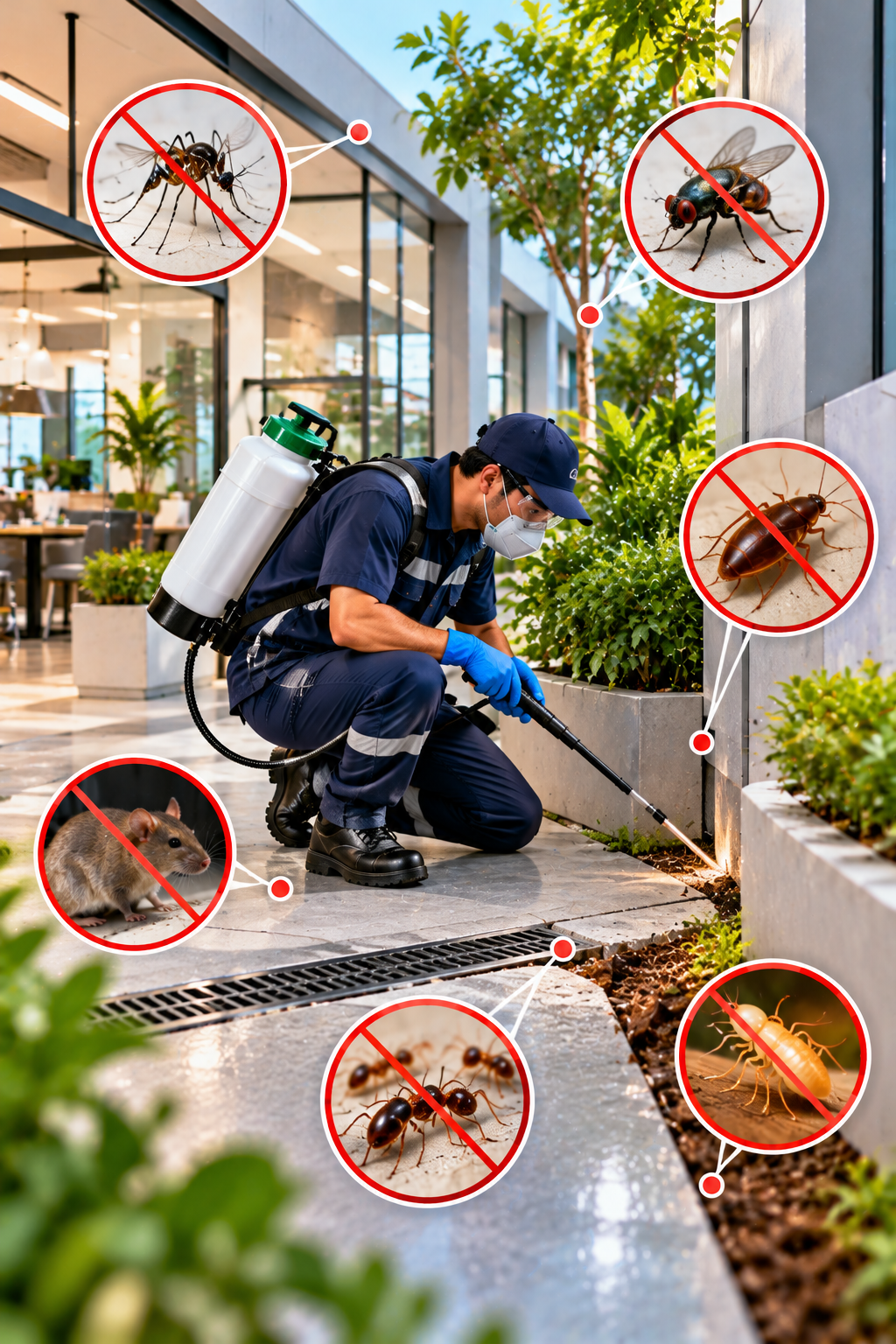
Select suitable preventive, physical, monitoring, or targeted treatment measures based on the assessment.
Review subsequent observations and findings, then adapt the plan where necessary.
Review of waste collection points, disposal areas, loading spaces, and supporting infrastructure.
Consider production areas, raw material storage, packaging zones, waste handling, and movement of goods.
Plan activities around sensitive areas, hygiene expectations, access controls, and operational requirements.
Focus on storage conditions, incoming goods, loading areas, inventory movement, and perimeter conditions.
Coordinate pest management with kitchens, guest areas, service spaces, waste handling, and business schedules.
Consider employee and visitor areas, pantries, utility spaces, records, and building access points.
Observing pest activity and identifying changes in site conditions.
Reviewing access points, moisture, storage, and housekeeping concerns that may contribute to recurring problems.
Selecting appropriate control measures based on inspection findings and the nature of the pest issue.
Supporting communication between pest management, housekeeping, and maintenance teams.
Using service observations and records, where applicable, to guide further action.
Reviewing pest activity and the effectiveness of implemented measures to identify opportunities for further improvement.
Call Now
Mail Id
Visit office