Address
Flat No. I-3, Rupchandr Complex, B-Wing,
3rd Floor, Next To Surana Complex, Aurangpura

Flat No. I-3, Rupchandr Complex, B-Wing,
3rd Floor, Next To Surana Complex, Aurangpura

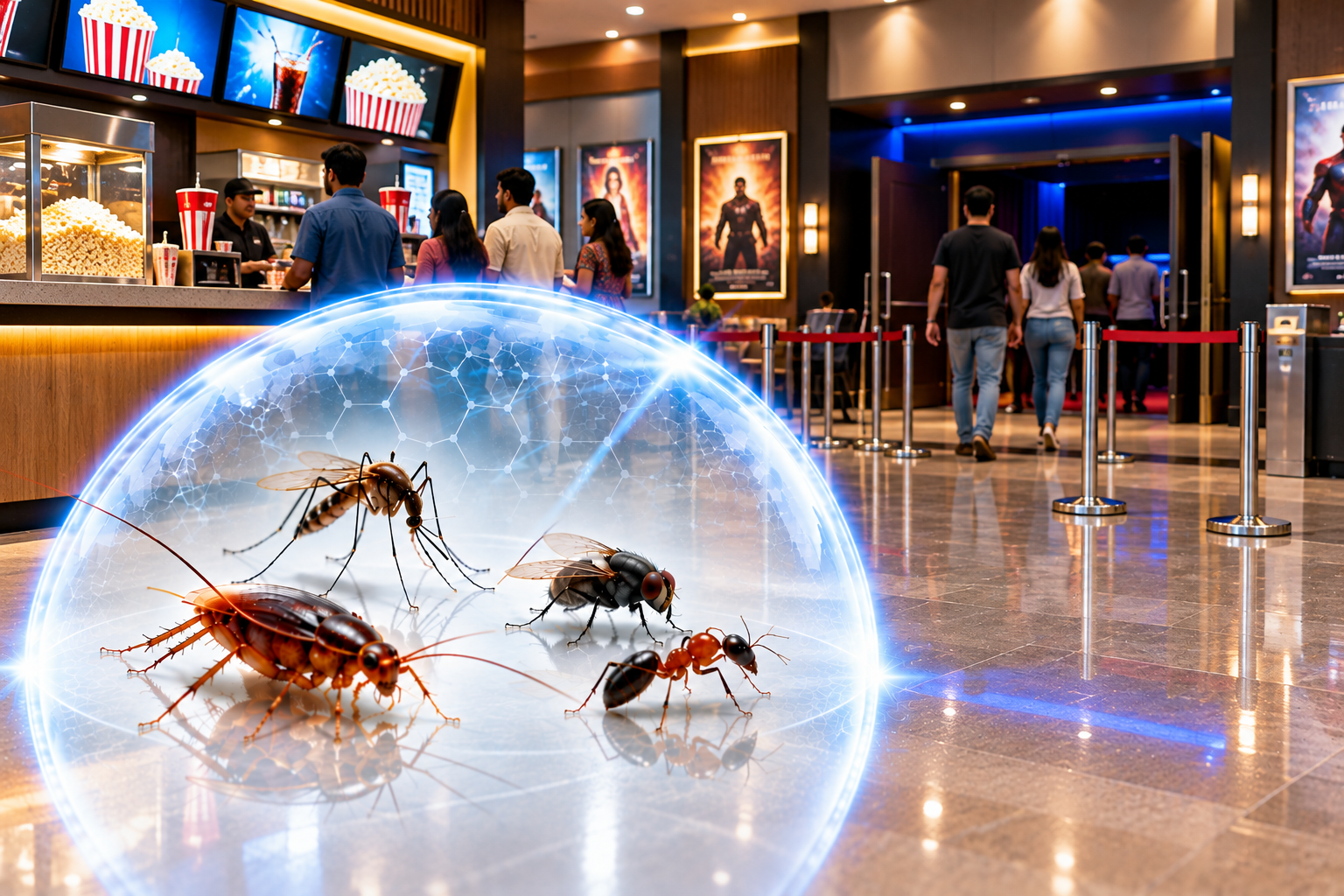
Cinema theatres bring together large audiences, food and beverage services, multiple show timings, enclosed auditoriums, seating areas, public facilities, staff spaces, storage, and technical infrastructure.
With high customer footfall and continuous movement between public and service areas, pest management requires more than occasional treatment. It requires attention to the entire cinema environment and the conditions that may contribute to pest activity.
24×7 Pest Management Services provides customized pest-management programs for cinemas, multiplexes, theatres, and entertainment venues, focusing on prevention, discreet service, monitoring, targeted control, and operational continuity.
Every Part of the Cinema Contributes to the Experience
A cinema is a customer-facing environment where cleanliness, comfort, food service, and smooth operations come together. Pest management should therefore extend across both visible and behind-the-scenes areas.
Multiplexes
Cinema Theatres
Single-Screen Theatres
Entertainment Complexes
Shopping Mall Cinemas
Premium & Luxury Cinemas
IMAX & Large-Format Theatres
Food Court & Cinema Facilities
Corporate Screening Facilities
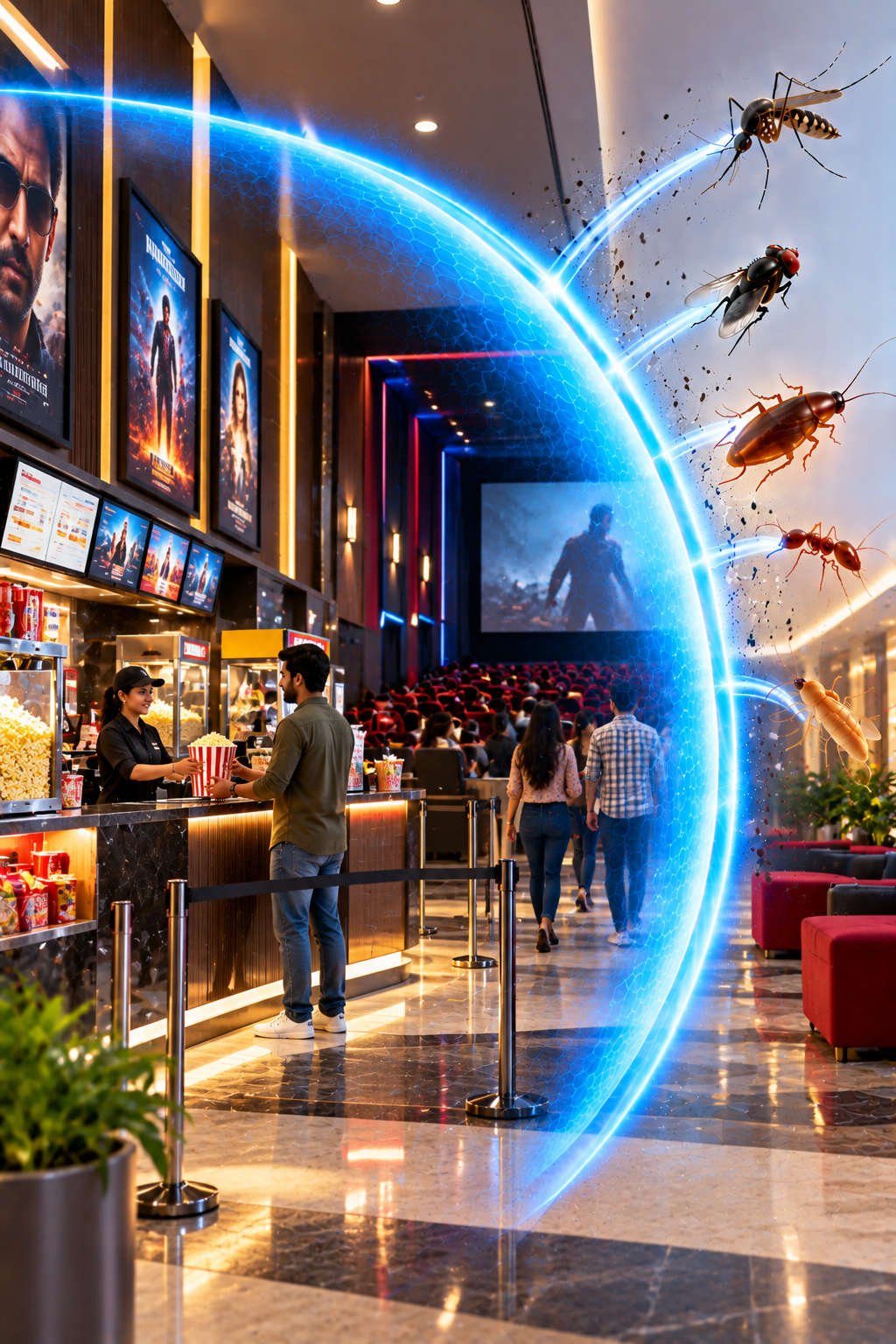


Food residues, ingredients, beverage spills, waste, kitchens, and storage areas can attract insects and rodents.
Frequent movement through entrances, auditoriums, corridors, and common areas can increase opportunities for pest entry.
Seats, flooring, wall gaps, equipment spaces, and difficult-to-access areas may require careful inspection.
Accumulated food packaging, discarded containers, waste-storage areas, and cleaning practices can influence pest activity.
Washrooms, drains, plumbing areas, damp spaces, and leaks can contribute to certain insect activity.
Food supplies, packaging materials, cartons, pallets, and incoming deliveries can potentially introduce pest risks.
Doors, service entrances, ventilation openings, structural gaps, and utility routes may provide potential entry points.
Landscaping, parking, waste areas, drainage, neighbouring premises, and building boundaries can influence pest pressure.
Inspect auditoriums, lobbies, food areas, storage, washrooms, staff spaces, utilities, and external premises.
Locate pest activity, potential entry routes, food sources, moisture, harbourage, and other contributing conditions.
Determine areas requiring attention based on pest activity, customer exposure, operating schedules, and facility conditions.
Recommend practical measures related to housekeeping, waste, food storage, drainage, exclusion, storage, and building maintenance.
Use suitable inspection and monitoring practices to identify activity and changing risk conditions.
Implement targeted pest-management measures according to the identified pest, location, and operational requirements.
Programs are developed around auditoriums, public areas, food-service spaces, back-of-house facilities, and external premises.
Service planning can take into account high-traffic areas, customer movement, showtimes, and visible public spaces.
Particular attention can be given to kitchens, food counters, storage, waste, and drainage.
Where practical, service activities can be scheduled during suitable operational windows to minimize unnecessary disruption.
We focus on identifying conditions that may contribute to recurring pest activity and provide practical recommendations.
Inspection observations, pest activity, treatment information, recommendations, and follow-up requirements can be documented as part of the agreed program.
Call Now
Mail Id
Visit office