Address
Flat No. I-3, Rupchandr Complex, B-Wing,
3rd Floor, Next To Surana Complex, Aurangpura

Flat No. I-3, Rupchandr Complex, B-Wing,
3rd Floor, Next To Surana Complex, Aurangpura

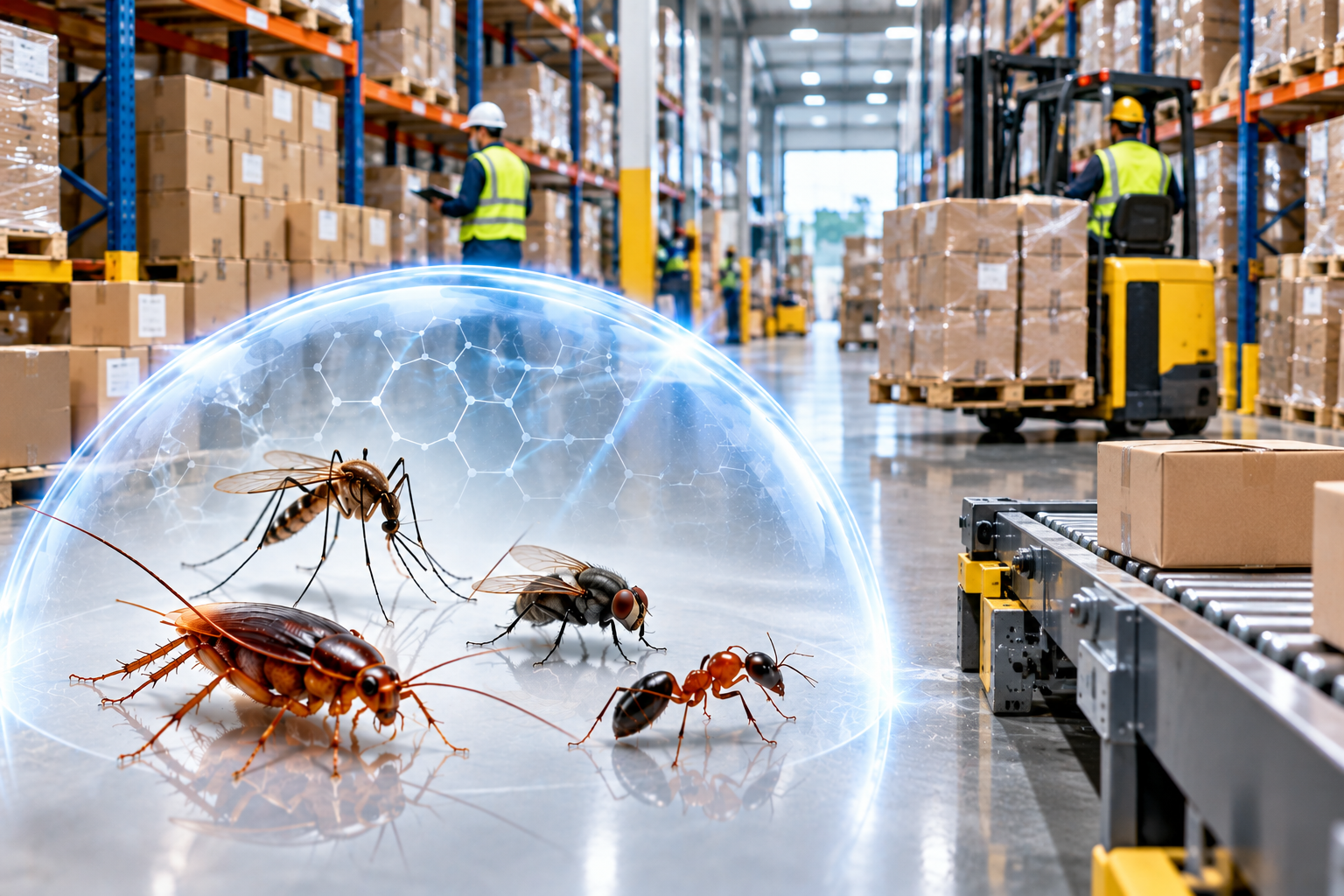
Warehouses and logistics facilities are built around movement goods arrive, materials are unloaded, stored, picked, transferred, and dispatched every day.
This constant movement, combined with large storage areas, pallets, packaging materials, loading docks, vehicles, and varying storage conditions, can create opportunities for pests to enter and remain within the facility.
24×7 Pest Management Services provides customized pest-management programs for warehouses, distribution centres, logistics facilities, and storage environments, helping identify pest risks, protect stored materials, strengthen preventive measures, and maintain better control across the supply chain.
A warehouse is more than a storage building. It is a constantly changing environment where products, people, vehicles, packaging, and materials move through multiple points.
General Warehouses
Distribution Centres
Logistics Hubs
Cold Storage Facilities
Food & FMCG Warehouses
Pharmaceutical Warehouses
Industrial Storage Facilities
Raw Material Stores
Finished Goods Warehouses
Spare Parts & Component Stores



Cartons, pallets, packaging materials, and transported goods can potentially introduce pests into storage environments.
Materials that remain undisturbed for extended periods may require additional inspection and monitoring.
Wooden pallets, cardboard, wrapping materials, and packaging waste can create potential hiding places.
Frequent opening of dock doors and vehicle movement can increase opportunities for pest entry.
Poor accessibility, unsuitable stacking, wall contact, clutter, and difficult-to-inspect areas can make pest detection more challenging.
Warehouses handling food, ingredients, agricultural products, or other susceptible materials may face additional pest pressures.
Waste accumulation, damaged packaging, spilled materials, and poor housekeeping conditions can contribute to pest activity.
Structural gaps, doors, drainage, vegetation, waste areas, and neighbouring premises can influence pest pressure.
Understand receiving docks, storage zones, picking areas, dispatch points, utilities, waste areas, and external premises.
Identify pest activity, entry routes, harbourage, storage-related risks, waste conditions, moisture, and structural vulnerabilities.
Recommend practical improvements involving storage practices, housekeeping, exclusion, waste management, pallet management, and building conditions.
Use appropriate inspection and monitoring practices across relevant warehouse areas.
Implement targeted pest-management measures where required according to the identified pest, location, and site conditions.
Evaluate pest observations, service findings, recommendations, and follow-up requirements.
Programs are designed around storage layouts, material types, inventory movement, loading areas, and facility conditions.
Incoming goods, pallets, packaging, vehicles, and receiving areas are considered when assessing potential pest-entry routes.
Monitoring and inspection can help identify pest activity before it becomes widespread across storage areas.
We look beyond visible infestation to identify conditions that may encourage pest activity.
Service observations, pest activity, treatment information, recommendations, and follow-up requirements can be documented as part of the agreed program.
Service activities can be coordinated with warehouse schedules, loading operations, inventory movement, and access requirements.
Call Now
Mail Id
Visit office