Address
Flat No. I-3, Rupchandr Complex, B-Wing,
3rd Floor, Next To Surana Complex, Aurangpura

Flat No. I-3, Rupchandr Complex, B-Wing,
3rd Floor, Next To Surana Complex, Aurangpura

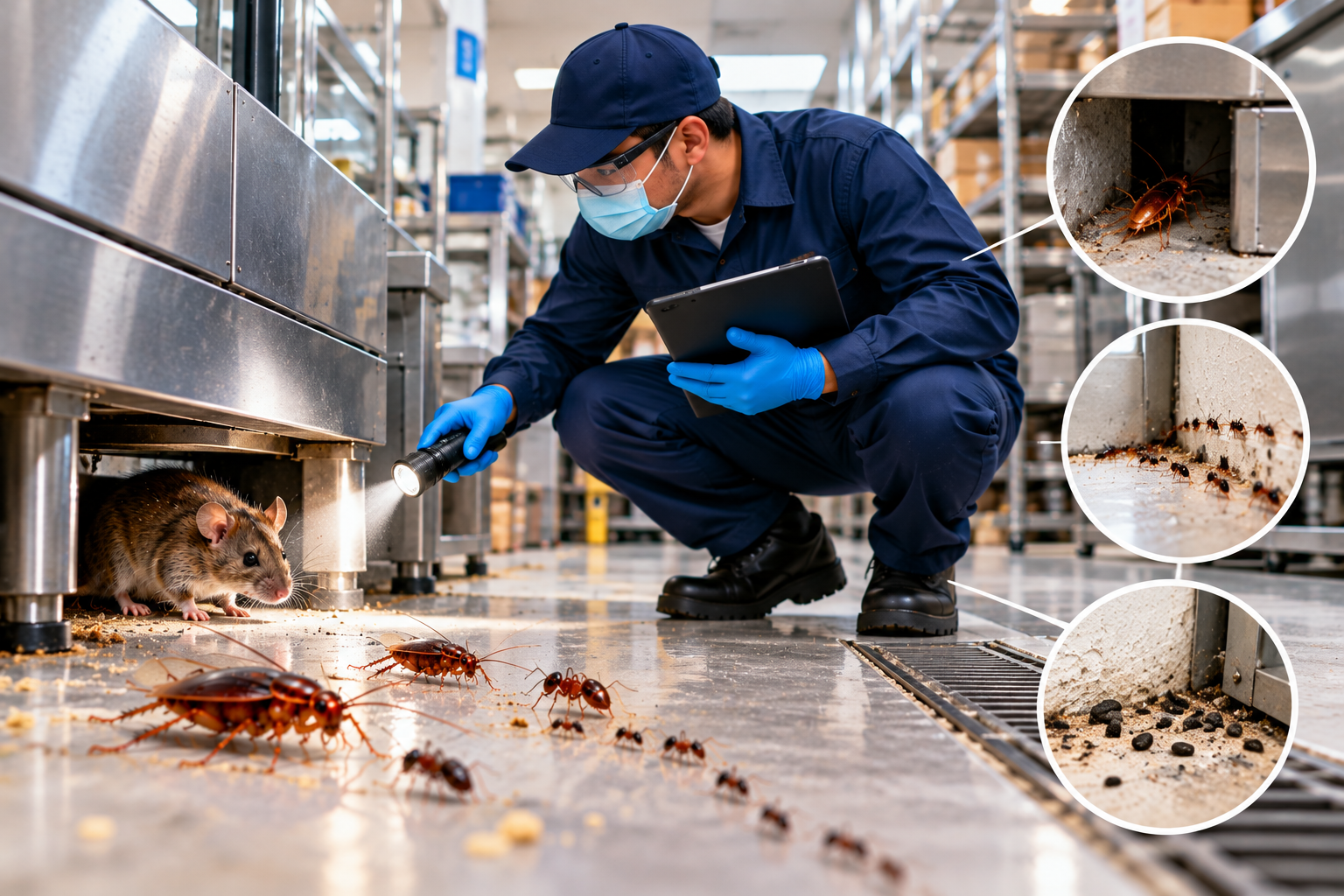
Effective pest management begins with understanding what is happening across a facility. Regular inspection and monitoring help identify signs of pest activity, recognise contributing conditions, and determine where attention may be required before a problem becomes more difficult to manage.
At 24×7 Pest Management Services, we use a structured, site-specific approach to inspection and monitoring. By observing vulnerable areas, reviewing activity patterns, and assessing changes in facility conditions, we help support informed pest management decisions for residential, commercial, and industrial environments.
Reviewing doors, windows, wall openings, utility penetrations, and other potential routes of entry.
Observing storage practices, incoming materials, clutter, and less frequently accessed spaces.
Checking relevant drainage areas, damp spaces, leaks, and standing water that may contribute to pest activity.
Assessing waste collection points, disposal areas, utility spaces, and housekeeping conditions.
Examining locations where pest activity could affect facility operations, hygiene expectations, or stored materials.
Inspecting building exteriors, landscaping, boundary walls, and nearby areas that may contribute to pest entry or activity.
Looking for visible pest activity, signs of movement, potential harbourage, and contributing conditions.
Using suitable monitoring stations, traps, or other devices where appropriate for the pest and environment.
Recording relevant observations to help identify recurring locations, patterns, or changes.

Prioritising areas based on observed activity, site sensitivity, and potential operational impact.
Noting environmental or housekeeping factors that may require corrective action.
Maintaining relevant inspection findings and monitoring observations to support follow-up actions and informed pest management decisions.
Focus on production zones, machinery surroundings, raw material storage, packaging areas, and waste-handling locations.
Review storage zones, loading bays, incoming goods, pallets, and perimeter conditions.
Plan inspections around sensitive areas, hygiene requirements, restricted access, and operational schedules.
Consider food preparation spaces, guest areas, service corridors, storage, and waste collection points.
Review work areas, pantries, utility rooms, shared spaces, and building access points.
Documenting relevant observations and identified concerns, where applicable.
Highlighting potential improvements to housekeeping, storage, waste handling, structural access, or moisture management.
Reassessing areas where pest activity or contributing conditions have been identified.
Using inspection findings to help select suitable control measures when required.
Reviewing activity trends and the effectiveness of implemented measures to identify opportunities for improvement.
Supporting communication with facility, housekeeping, and maintenance teams to address identified issues.



Call Now
Mail Id
Visit office